
PRICING · UPDATED OCTOBER 2026
What does AI automation cost?
It depends on the return.
There is no honest single price for AI automation, because the same workflow can be a two-day job in one company and a month in another. Here is what drives the cost, how we price, and why the first step is free.
- Audit free
- First workflow free
- Live in a week
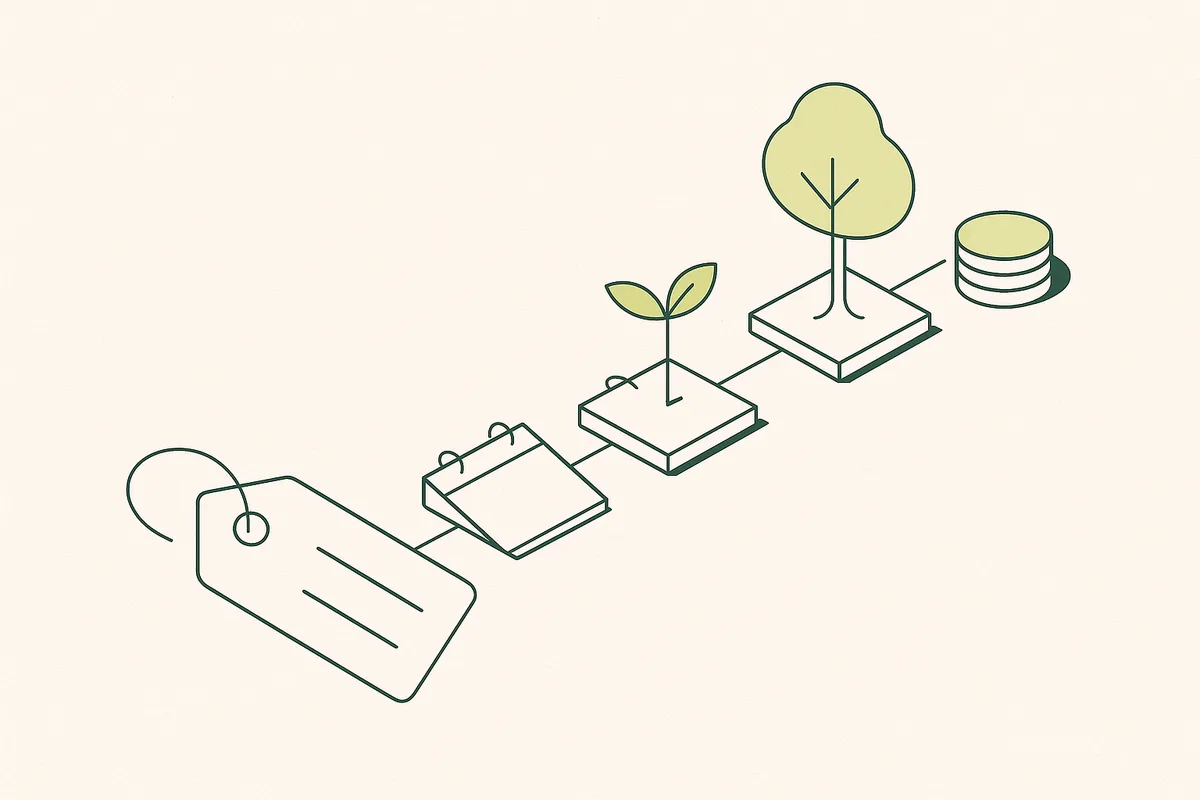
Illustrative. Your audit estimates your own payback before you commit.
WHAT YOU ALREADY USE
 QuickBooks
 Xero
Xero Stripe
 HubSpot
 Google Sheets
 n8n
n8n Claude
01 / WHAT DRIVES THE COST
Four things
set the price.
Model and tool costs are usually small. The real cost is in understanding your business and connecting it properly.
How many tools are involved
Two modern apps with APIs is quick. Five tools including a legacy system takes longer.
How much knowledge is needed
An agent that must know your rules and past work needs a knowledge layer built first.
How much can go wrong
Client-facing and financial work needs approvals, checks and audit trails.
Running costs
AI model usage and hosting, usually small next to the hours saved.
EXAMPLE ENGAGEMENT
A 22-person recruitment agency
The agency had quotes from three vendors between $4k and $60k for “AI automation” and no way to compare them.
- Free audit: candidate screening and client updates ranked highest
- Free first workflow: candidate summaries drafted from CVs and notes
- Next build priced against the measured hours it saved
A composite example with details changed. We do not name clients without their permission.
Typical AI automation price ranges
Across the market, simple workflow automations are often quoted in the low thousands of dollars, AI agents and multi-tool systems in the tens of thousands, and enterprise programmes far higher. Those ranges are wide because the work is genuinely different from company to company.
We prefer not to quote a number before we have seen your systems. Instead, the audit and the first workflow are free, and every next build is priced against the return it produces, so you can judge the cost against a measured result rather than a promise.
Build versus buy
If an off-the-shelf tool does the job, buy it, and we will tell you so. Custom builds pay when the work depends on knowledge of your business, crosses many tools, or needs control over data and approvals.
How to compare quotes
Ask every vendor the same questions: what is live in the first week, who owns the system, what happens when it fails, who maintains it, and what return they expect it to produce. A quote without answers to those is not comparable.
02 / HOW PRICING WORKS
Free first,
priced on proof.
We ask for money only after you have seen the approach work on your own tools.
We sit with the foundersFREE
One working session on how the business actually runs: the systems, the workflows, the people in each step, and the one lever that matters most this quarter.
We audit your stack and your knowledgeFREE
Which tools you run, where data is retyped between them, where know-how lives only in people’s heads, and which work is worth automating at all.
We build one workflow, free, inside a weekFREE
Not a demo. A real automation on your real tools, so you see the output and the time saved before you pay us anything.
We size the next builds on ROI
Hours saved, capacity gained, revenue unlocked. Each next build is priced against that number and agreed in writing before we start.
We stay on as your AI team
We monitor, fix, extend and train. Workflows change as your strategy changes, so we do not hand over one automation and disappear.
03 / WHAT YOU PAY FOR
Outcomes,
not hours.
Every engagement includes the parts that make automation last.
Design
Mapping the work and the knowledge it needs.
Build
Integrations, agents and workflows on your tools.
Safety
Approvals, permissions, logging and failure alerts.
Infrastructure
Set up and hosted where you control the data.
Training
Your team confident using and fixing it.
Partnership
Ongoing changes as your business evolves.
04 / THE ROI LENS
Judge the cost
against the return.
The right question is not what it costs, but how long it takes to pay back.
Run your own numbers| Example | Today | With the system |
|---|---|---|
| Hours saved per month | — | 160 |
| Value of those hours | — | $8,000/month |
| Extra clients the team can take | — | +20/month |
| Payback period | — | Weeks, not years |
Illustrative, not a client result. Your audit replaces these numbers with your own.
05 / WHAT WE WON’T BUILD
Saying no is
part of the job.
Most automation fails because someone automated the wrong thing. These are the builds we turn down.
- Quoting before understanding your systems
- Hourly billing with no end in sight
- Charging for work your tools already do
- Hidden running costs
START HERE
Find out what yours
would cost.
Book the free audit. You get the expected return of each opportunity and a free first workflow before any price is discussed.
- A free audit of your systems, workflows and team
- One workflow built free, live inside a week
- A plan sized on ROI, priced before we build anything else
You talk to the people who build it, not an account manager.info@chronexa.io
Rather write it down first?
How much does AI automation cost?
It varies widely: simple automations are often quoted in the low thousands of dollars and multi-tool AI systems in the tens of thousands. We start with a free audit and a free first workflow, then price each build against the return it produces.
How much does it cost to build an AI agent?
It depends on the job, the tools it must use and how much company knowledge it needs. A narrow agent on modern tools is quick. An agent that reviews and approves work across several systems needs a knowledge layer and approvals first.
What are the running costs?
AI model usage and hosting, usually a small fraction of the hours saved. We estimate them in the audit so there are no surprises.
Why is the first workflow free?
Because the best way to show the approach works for your company is to ship something real on your tools. If it does not save time, you keep the audit and owe nothing.