
A Meta Lead System That Recovers Missed Webhooks
A live lead-operations layer captures Meta form submissions, writes clean records to Google Sheets, alerts the team on WhatsApp, nudges consented leads and reconciles missed events every 15 minutes.
- Proof basisRunning inside Chronexa
- IndustryMarketing & Lead Operations
- Year2026
- ServicesLead Automation, Meta Conversions API, WhatsApp Automation
Verified from two active Chronexa workflows: the real-time Meta lead webhook and the 15-minute reconciliation job. The case reports system behaviour, not an unverified conversion claim.
The short answer
Chronexa uses two n8n workflows to protect Meta lead delivery. The first captures each lead in real time, stores a clean record and sends consent-aware WhatsApp messages. The second checks Meta every 15 minutes and replays any lead that the webhook missed through the same production path.
Tools and systems used
- n8n
- Meta Graph API
- Meta Lead Ads webhooks
- Google Sheets
- WhatsApp Cloud API
- OAuth
Why a successful ad can still lose the lead
Meta sends a webhook when a form is submitted, but webhooks are delivery attempts rather than a durable business record. A temporary outage, token issue or workflow failure can leave the advertising dashboard showing a lead that never reached the sales team.
Even when capture works, response can split across spreadsheets, notifications and manual WhatsApp messages. That creates delay precisely when intent is highest.
The non-negotiables
The webhook had to acknowledge Meta correctly, fetch the full lead, normalise field names across forms, prevent non-consented messaging and retain a simple operating record the team could inspect without opening n8n.
How the workflow runs
- Verify the webhook
The endpoint answers Meta’s verification challenge before it accepts lead events.
- Fetch the complete lead
The event ID is exchanged for the submitted form fields through the Graph API.
- Normalise form fields
Different form labels are mapped into one stable lead record.
- Store and notify
The record is written to the working sheet and the team receives a WhatsApp alert.
- Respect consent
A lead-facing message is sent only when the submitted consent field allows it.
- Reconcile every 15 minutes
A scheduled job compares recent Meta lead IDs with stored IDs and replays missing events.
The live workflow
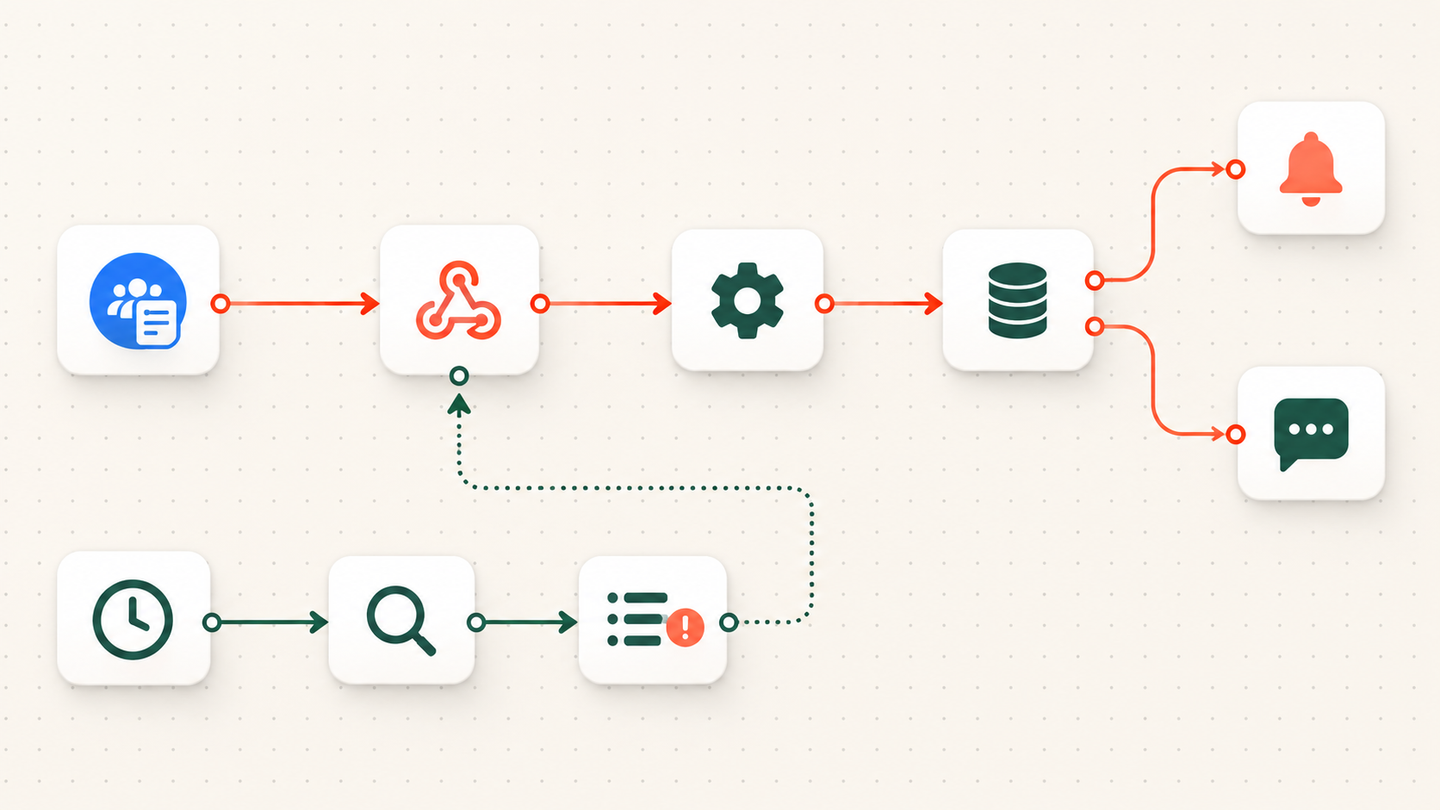
The real-time path accepts Meta’s verification challenge and lead event, fetches the submitted fields from the Graph API, normalises them and inserts the newest lead at the top of the working sheet. It also writes the campaign-specific tab, fans out team alerts and sends a lead nudge only when consent is present.
A second workflow runs every 15 minutes. It reads the recorded Meta lead IDs, checks active forms for recent submissions, identifies anything absent from the sheet and replays the missing lead through the same webhook. Recovery therefore uses the exact production path instead of a second set of business rules.
What changed
The team has one traceable record and two chances to capture each lead: the immediate event and the scheduled reconciliation. Messaging rules are explicit, and missed events surface as recoverable operations rather than invisible lost demand.
Why the recovery workflow matters
A webhook is an event delivery attempt. It is not a guarantee that the sales record was written. A short outage, an expired token or a failed Google Sheets call can leave a gap. The scheduled reconciliation closes that gap by treating Meta’s lead list as the upstream record and the sheet as the operating record.
The recovery job reads recent leads from active forms, builds a set of IDs already stored, and sends only the difference back to the live endpoint. That reuses normalisation, consent and notification logic. It also avoids maintaining a second version of the same process.
The business outcome
The practical outcome is reliability: the team has an immediate path and a recovery path. We do not claim that the workflow alone increased conversion. It makes sure paid demand is less likely to vanish between Meta and the first operating queue, which is the prerequisite for fast response and honest campaign reporting.
Safeguards and failure handling
- Consent is checked before lead-facing WhatsApp messages.
- Lead IDs provide a stable way to compare Meta with the operating sheet.
- Recovered records use the main webhook path so business rules do not drift.
- API and token failures remain visible in n8n execution history for repair.