Blog

Beyond the Hype: Deconstructing the AI Bubble and Building Real Enterprise Value Through the 3 Layers of AI Evolution

Ankit Dhiman

Min Read

Is the AI bubble bursting? Discover the 3 layers of AI evolution—from commodity wrappers to deep industrial orchestration—and learn how to build defensible enterprise value and massive ROI.


Beyond the Hype: Deconstructing the AI Bubble and Building Real Enterprise Value Through the 3 Layers of AI Evolution

The AI landscape is currently defined by a deafening amount of noise. Headlines fluctuate between utopian promises of infinite productivity and dire warnings of an impending "AI bubble" burst. We see massive valuations for seemingly simple applications, a saturated market for generic text generation, and a growing sense among executives that the initial novelty of ChatGPT is wearing thin. To the casual observer, it feels like a modern-day dot-com rush—a chaotic scramble where billions are poured into startups whose primary "intellectual property" is a slightly more clever prompt than the competition.

But is it all just hype destined for a dramatic collapse?

If you look solely at the surface, the "bubble" narrative carries weight. However, beneath the turbulent surface of commodity AI, a profound transformation is quietly unfolding. The real value in artificial intelligence isn't disappearing; it is maturing. We are moving out of the "toy" phase and into the "infrastructure" phase. To understand where true, generational enterprise ROI is being built, we must look beyond the surface level of simple chat interfaces. We must explore the deep integration, autonomous execution, and systemic optimization occurring across three distinct layers of AI evolution.

This is the roadmap for moving past the commodity bubble to architecting enduring value through agentic AI and industrial orchestration.

The AI Bubble: Bursting or Just Beginning?

Let’s address the elephant in the room: there is a palpable bubble in the Basic AI Application Layer. Thousands of startups have rushed to market offering "revolutionary" services like marketing copy generation, basic image editing, and simple customer support chatbots.

The problem? Most of these products are "wrappers." They are thin functional layers built around foundational models like GPT-4, Claude, or Gemini. They have negligible unique technology and, consequently, no defensible moats. When five thousand competitors offer essentially the same commoditized service using the same underlying API, pricing pressure intensifies, and true differentiation disappears. For a founder or a CEO, investing heavily in these "Layer 1" tools often leads to a plateau in results.

However, this saturation doesn't render all of AI a bust. It simply means the market is maturing. It signifies that the specific, easy-to-replicate application layer is experiencing predictable market forces. The true evolution is transitioning from isolated tasks to integrated systems and autonomous execution.

To navigate this, we use the 3 Layers of AI Evolution Framework. This model helps us pinpoint where value is shifting and how businesses can build defensible, high-margin positions in an automated economy.

Layer 1 – The Commodity Layer: Where Hype Meets Saturated Utility

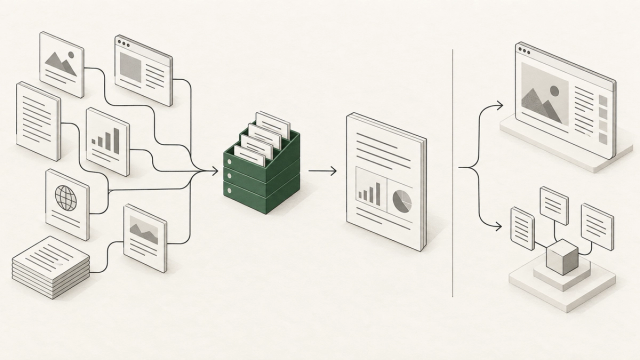
This foundational layer represents the entry point for most businesses. It is characterized by isolated AI applications automating well-defined, individual creative or analytical tasks. While useful, it is also the area with the lowest barriers to entry and the highest degree of competition.

Definition and Characteristics

Layer 1 AI focuses on Task Augmentation. It is the "Text Box" era of AI. Development here typically centers on prompt engineering and basic UI/UX design. The products are stand-alone tools rather than deeply integrated systems. You go to the tool, you give it an input, it gives you an output, and you manually move that output to where it needs to go.

Key Characteristics of Layer 1:

  • Low Moat: Competitors can replicate your core functionality with minimal investment. If your value proposition is "we write better emails," you are one OpenAI update away from obsolescence.

  • High Saturation: Because it is easy to build, thousands of vendors are fighting for the same budget.

  • Task-Focused: It automates single steps (writing a caption, summarizing a meeting) rather than end-to-end processes.

  • Pricing Pressure: Commodity products inevitably engage in a "race to the bottom" on price, making sustained profitability challenging.

Practical Uses and "Conceptual Blocks"

In Layer 1, we deal with Conceptual Blocks. These are specific, useful, but isolated automated functions.

  • Content Drafting: Quickly generating initial drafts for blog posts or social media. This provides speed but lacks the strategic depth required for high-level B2B positioning.

  • Coding Snippets: Using an AI to generate a common sorting algorithm or a basic Python script. It’s a "Conceptual Block" of code that is valuable but disconnected from the broader software architecture.

  • Proofreading and Basic Editing: Automating grammar checks or style suggestions. It's efficient, but it has limited semantic understanding of your brand’s specific "voice."

  • Image Prototyping: Generating a quick visual concept for a mockup.

The mistake many startups make is trying to build an entire company around a single block—like an "email summarization block." For a mid-market enterprise, these tools are fine for incremental gains, but they do not move the needle on the P&L in a way that creates a competitive advantage.

Layer 2 – The Agentic Co-Worker: Moving Beyond Hype to True Stack Integration

This layer represents the maturation point where AI moves from a "tool you use" to a "co-worker that acts." This is the transition from stand-alone applications to Integrated Agents that understand context and act within a broader system.

Definition and Characteristics

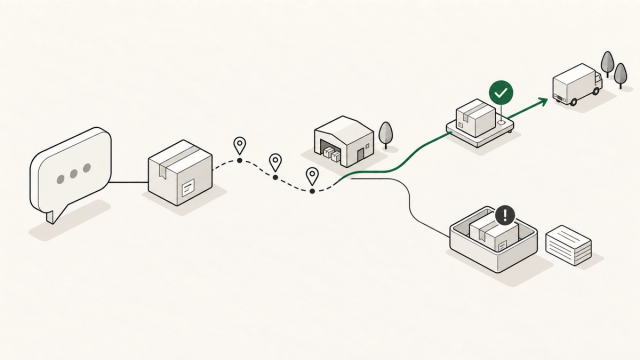
Layer 2 AI agents are not passive. They possess Persistence, State, and Context Awareness. Crucially, they have Tool Access. They don't just tell you what to do; they do it. They understand the intent behind complex requests and can independently execute multi-step tasks across your existing software stack.

Key Characteristics of Layer 2:

  • Deep Stack Integration: These agents are connected via robust APIs to your CRM (HubSpot/Salesforce), project management tools (Asana/Monday), email clients, and secure databases.

  • Context Sensitivity: The agent remembers past interactions. It knows which clients are high-priority and which projects are nearing a deadline.

  • Authorized Permissions: Within defined parameters, the agent can actively query databases, update records, and trigger software actions.

  • Execution Focus: It handles a logical sequence of distinct steps to achieve a goal (e.g., "Onboard this client") rather than just "Writing a welcome email."

Practical Uses and "Implementation Blocks"

In Layer 2, we move to Implementation Blocks—robust, interconnected process components.

  • Automated Lead Qualification: An AI agent proactively monitors your inbound leads. It doesn't just "score" them; it queries external data to enrich the profile, updates the CRM, assigns the lead to the correct rep, and schedules an introductory email.

  • Meeting Lifecycle Execution: Instead of just a transcript, an agent extracts action items, assigns them directly to team members in your project tool, and proactively schedules the follow-up meeting based on everyone's availability.

  • Integrated Customer Support Orchestration: An agent that doesn't just "chat," but actually accesses customer history and troubleshooting tools to resolve a Tier-1 ticket autonomously, only involving a human for complex escalations.

Layer 2 is where Chronexa typically begins its engagements. We aren't interested in giving you another text box; we are interested in building the "Implementation Blocks" that string together your sales, marketing, and operations into a cohesive, automated workflow.

Layer 3 – Deep Industrial Orchestration: The Visionary Frontier

This is the ultimate evolution. This is where AI moves from augmenting workflows to fundamentally transforming the Core Industrial Processes of a business. This is the "Holy Grail" of ROI. This is where the tourists disappear and the visionaries—the ones building foundational infrastructure—take over.

Definition and Characteristics

Layer 3 is about orchestrating entire ecosystems of distinct agents and algorithms for systemic optimization. It requires deep partnership between highly skilled AI engineers and Subject Matter Experts (SMEs). It often involves specialized model training, fine-tuning on proprietary data, and deep integration into complex legacy systems or custom-built infrastructure.

Key Characteristics of Layer 3:

  • Extremely High Barrier to Entry: It requires specialized domain expertise that can't be "prompted."

  • SME Collaboration: You cannot build Layer 3 systems without the people who have spent 20 years in the trenches of that specific industry.

  • Deep System-Wide Integration: The AI is woven into the very fabric of the company's core operations—from capital markets reconciliation to manufacturing supply chains.

  • Undeniable Defensibility: The ROI here is systemic. It reduces fundamental costs by 40–70% and creates competitive advantages that are nearly impossible for a competitor to replicate without a similar multi-year investment.

Practical Uses and "Industrial Implementation Blocks"

At this level, we build Industrial Implementation Blocks—highly specialized, interdependent components within an expansive systemic orchestration.

  • End-to-End Capital Market Reconciliations: Imagine an ecosystem of agents that ingests diverse transaction data from disparate global systems, reconciles trillions in complex financial assets with near-perfect accuracy, detects anomalies with unparalleled precision, and manages intricate compliance reporting. For someone with a background in capital markets, the value of eliminating human error in this $100-trillion-plus arena is self-evident.

  • Manufacturing Supply Chain Optimization: Orchestrating demand forecasting, raw material procurement, real-time inventory management across global factories, and predictive maintenance to minimize downtime at a systemic scale.

  • Smart City and Government Service Orchestration: Deeply integrated systems managing public infrastructure—optimizing traffic flow in real-time, dynamically distributing energy resources, and coordinating emergency responses based on live data feeds.

  • Precision Healthcare Orchestration: Integrating genomic data, electronic health records, and real-time patient monitoring to optimize treatment plans and hospital workflows at a global scale.

Layer 3 is where "Industrial Orchestration" happens. It’s where businesses like Chronexa focus for clients who want to move beyond "efficiency" and toward "market dominance."

Building Defensibility and Generational Value

So, is AI a bubble?

If your strategy is primarily built on Layer 1—leveraging isolated tools and "prompt-wrappers"—you are likely experiencing the "bubble" firsthand. You are seeing diminishing returns and high churn.

But if you are a visionary leader, you see that the real, generational wealth and operational transformation are being built at Layers 2 and 3. True enterprise ROI lies in Deep Stack Integration and Systemic Industrial Orchestration.

Building enduring defensibility in the AI era isn't about keeping your prompts a secret. It’s about:

  1. Moving beyond "wrappers" to proprietary systems: Use deep stack integration and unique data utilization to create a moat.

  2. Focusing on autonomous execution: Develop agentic workflows that have a systemic impact on your bottom line, not just your "word count."

  3. Solving industry-specific problems: Collaborate with SMEs to tackle the deep operational bottlenecks that simple apps can't touch.

  4. Investing in long-term infrastructure: Commit to the development cycles required for Layer 3 orchestration.

Assess Your Position:

  • Are you in Layer 1? You’re using isolated tools for creative support. You are gaining speed, but no long-term defensibility.

  • Are you in Layer 2? You are actively integrating autonomous agents into your stack to drive process improvement. You are starting to see real ROI.

  • Are you aiming for Layer 3? You are envisioning a future where your entire core industrial process is an optimized, AI-orchestrated ecosystem.

The AI bubble in commoditized apps is a natural market correction, signaling the maturity of basic capabilities. But the real story—the one that will define the next decade of business—is being written by those who look beyond the text box to architect enduring value across the integrated and orchestrated layers of artificial intelligence.

Focus your vision upwards. Move decisively beyond the hype. Start building for systemic impact and generational enterprise ROI today.

Ready to move beyond the text box? Chronexa specializes in Layer 2 and Layer 3 AI orchestration. We don't just give you tools; we build the industrial infrastructure of your future.

Book your free Automation Audit at chronexa.io

About author

Ankit is the brains behind bold business roadmaps. He loves turning “half-baked” ideas into fully baked success stories (preferably with extra sprinkles). When he’s not sketching growth plans, you’ll find him trying out quirky coffee shops or quoting lines from 90s sitcoms.

Ankit Dhiman

Head of Strategy

Subscribe to our newsletter

Sign up to get the most recent blog articles in your email every week.

Other blogs

Keep the momentum going with more blogs full of ideas, advice, and inspiration

Sometimes the hardest part is reaching out, but once you do, we’ll make the rest easy.

Opening Hours

Mon to Sat: 9.00am - 8.30pm

Sun: Closed

2:17:15 PM

Chronexa

Sometimes the hardest part is reaching out, but once you do, we’ll make the rest easy.

Opening Hours

Mon to Sat: 9.00am - 8.30pm

Sun: Closed

2:17:15 PM

Chronexa

Sometimes the hardest part is reaching out, but once you do, we’ll make the rest easy.

Opening Hours

Mon to Sat: 9.00am - 8.30pm

Sun: Closed

2:17:15 PM

Chronexa