The Enterprise Teardown: n8n vs Zapier in 2026
Every scaling company shares a common, quietly disastrous origin story.
Three years ago, a resourceful marketing manager or sales lead needed to connect a Facebook Lead Ad to a Google Sheet. They signed up for Zapier, dragged a few blocks together, and within twenty minutes, data was flowing. It felt like magic.
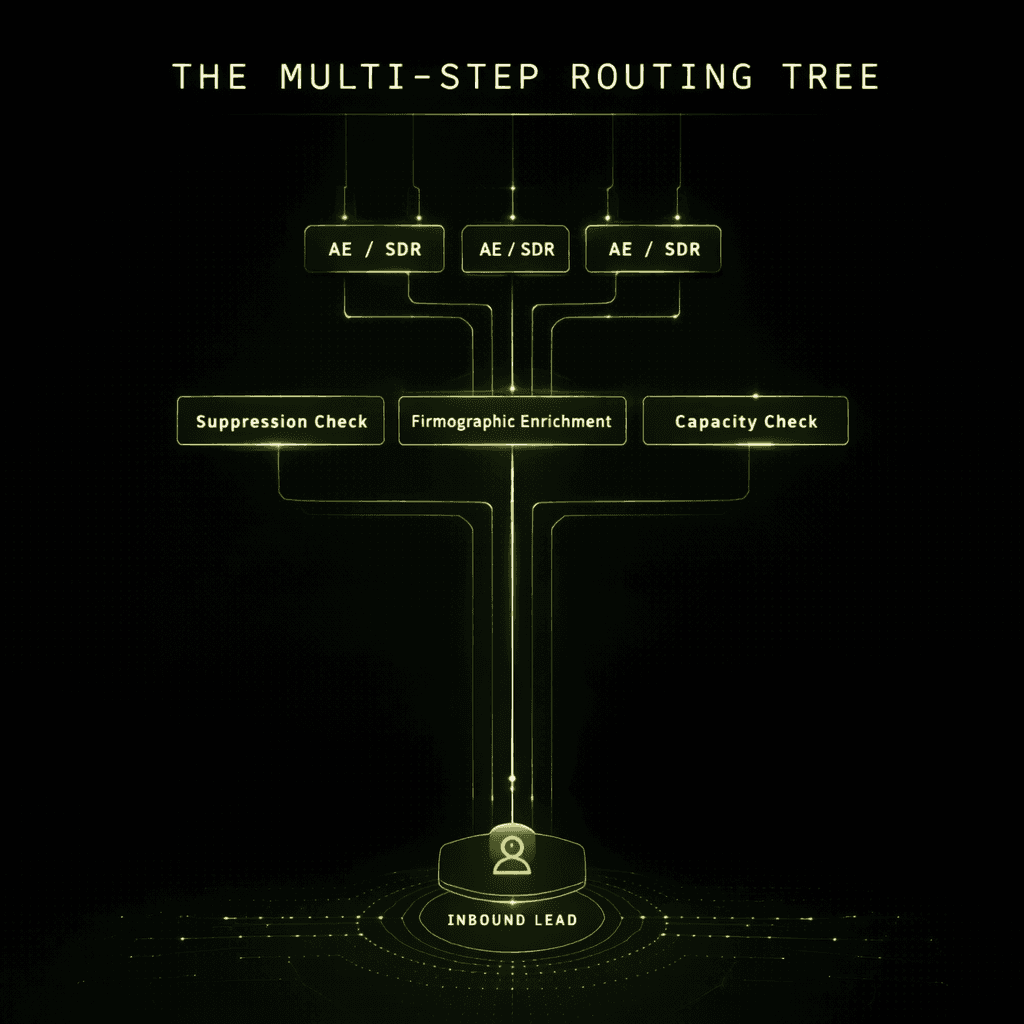
Then, the company grew. The Chief Operating Officer looked at this "magic" and decided to run the entire revenue engine through it. Suddenly, that simple Zap mutated. Now it needs to pull a lead, query Clearbit for enrichment, check Salesforce for existing accounts, route the data through a custom lead-scoring model, delay for 15 minutes, format the output, and ping a specific SDR in Slack based on territory routing rules.
And suddenly, the magic stops. The workflow breaks silently. Leads disappear into the void. And the CFO is staring at an exorbitant software bill because a single loop of logic consumed 300 "tasks" in three seconds.
This is the reality of mid-market automation today. The tools that got you from $1M to $10M will actively break your company as you scale from $10M to $50M.
If you are an Operations Leader or Technical Founder evaluating n8n vs zapier in 2026, there is no longer a debate to be had. Zapier is a consumer-grade tool built for marketing teams and solopreneurs. n8n is an industrial-grade platform built for engineering and operations teams.
This is the definitive, highly opinionated teardown of why Zapier breaks under enterprise load, and why transitioning to n8n is the only viable path for true enterprise workflow orchestration.
The Architectural Divide: Linear Chains vs. Visual Canvas
To understand why Zapier fails at scale, you have to look at its foundational architecture. Zapier was built to be idiot-proof. To achieve that, it forces a strictly linear, top-to-bottom workflow structure. Trigger → Action 1 → Action 2 → Action 3.
But real enterprise operations are not linear. They are conditional webs of logic.
When you try to build conditional branching in Zapier, you are forced to use "Paths." Paths in Zapier are notoriously rigid, limited in scope, and visually claustrophobic. If you need a path within a path (nested logic), you hit a hard wall. You end up duplicating Zaps, creating a tangled, unmanageable mess of disconnected automations just to accomplish a standard conditional workflow.
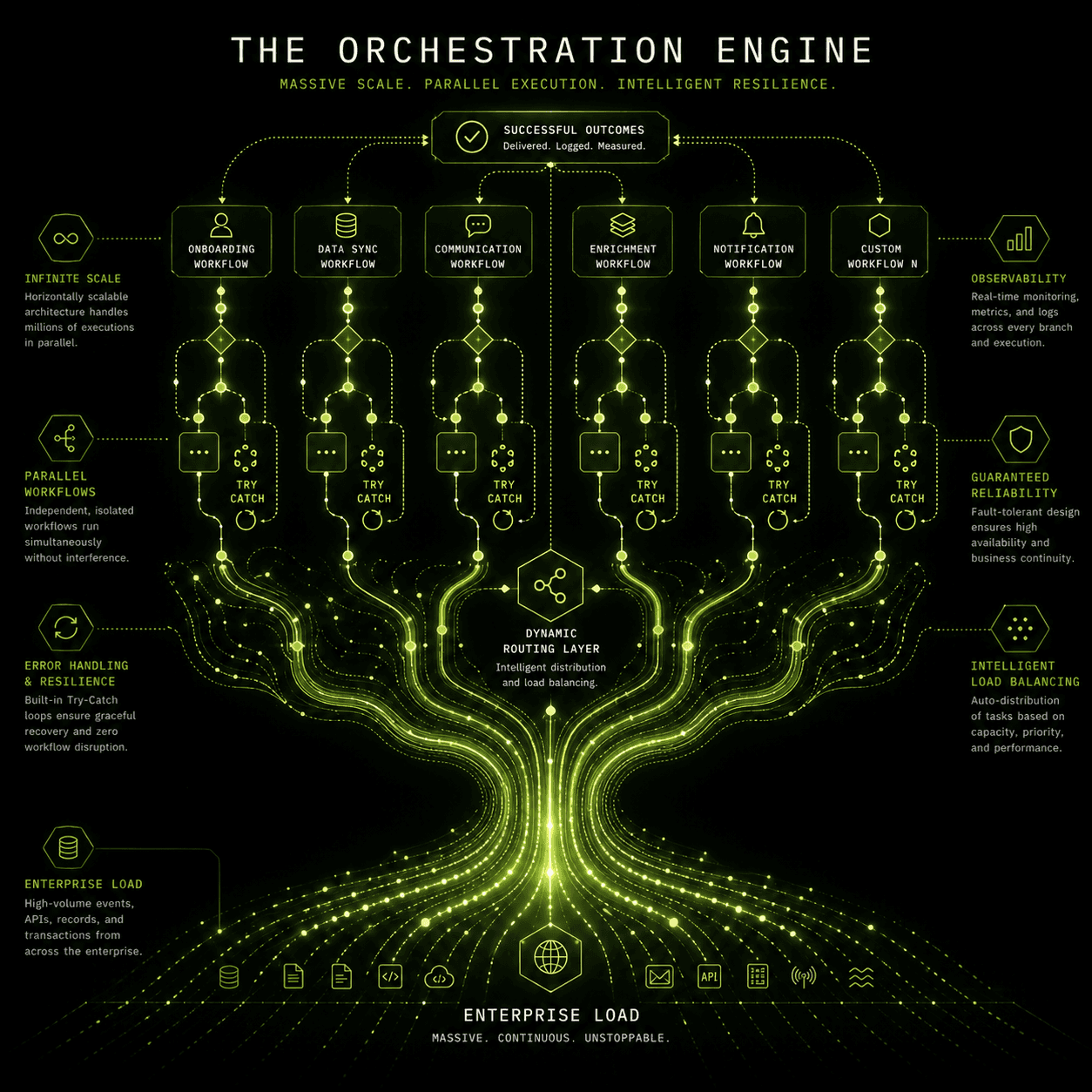
n8n abandons the linear chain entirely in favor of a free-flowing, node-based visual canvas. In n8n, your workflow is a literal flow chart. You can route data through Switch nodes, multiplex it out to five different APIs simultaneously, merge the responses back together, and pass the unified payload down a single pipe.
It is visual programming. You are not just "connecting apps"; you are architecting a microservice. When you look at an n8n canvas, you can instantly read the logic of your business operations. When you look at a Zapier account with 400 active, disconnected Zaps, you are looking at operational debt.
Error Handling: The Silent Killer of Bad Automation
What happens when your CRM API has a 3-second hiccup while your automation is running?
In Zapier, the workflow halts. The task fails. The lead is lost forever. Sometime later, you receive a generic automated email stating "Your Zap hit an error," leaving you to dig through terrible logs trying to figure out which specific payload failed and why. By the time you find it, the SLA for contacting that lead has expired.
Zapier operates on the assumption that APIs never go down and data is always perfectly formatted. Operations professionals know this is a fairy tale.
n8n treats errors as an expected, structural part of enterprise workflow orchestration. Because n8n is built for engineers, it includes native Try/Catch logic directly on the canvas.
If an HTTP request to your database fails, n8n does not just collapse. You can route the "Error" output of that specific node to a completely different path. You can tell n8n: “If this API call fails, wait 30 seconds and try again. If it fails a third time, format the raw payload, push it into a dead-letter queue in PostgreSQL, and send a Slack message with a clickable button to the engineering team so they can manually review the JSON.”
This is called graceful degradation. It is the difference between a brittle toy and a production-ready system. With n8n, a localized failure is caught and contained. With Zapier, a localized failure breaks the entire chain.
Sub-Workflows: The End of Spaghetti Logic
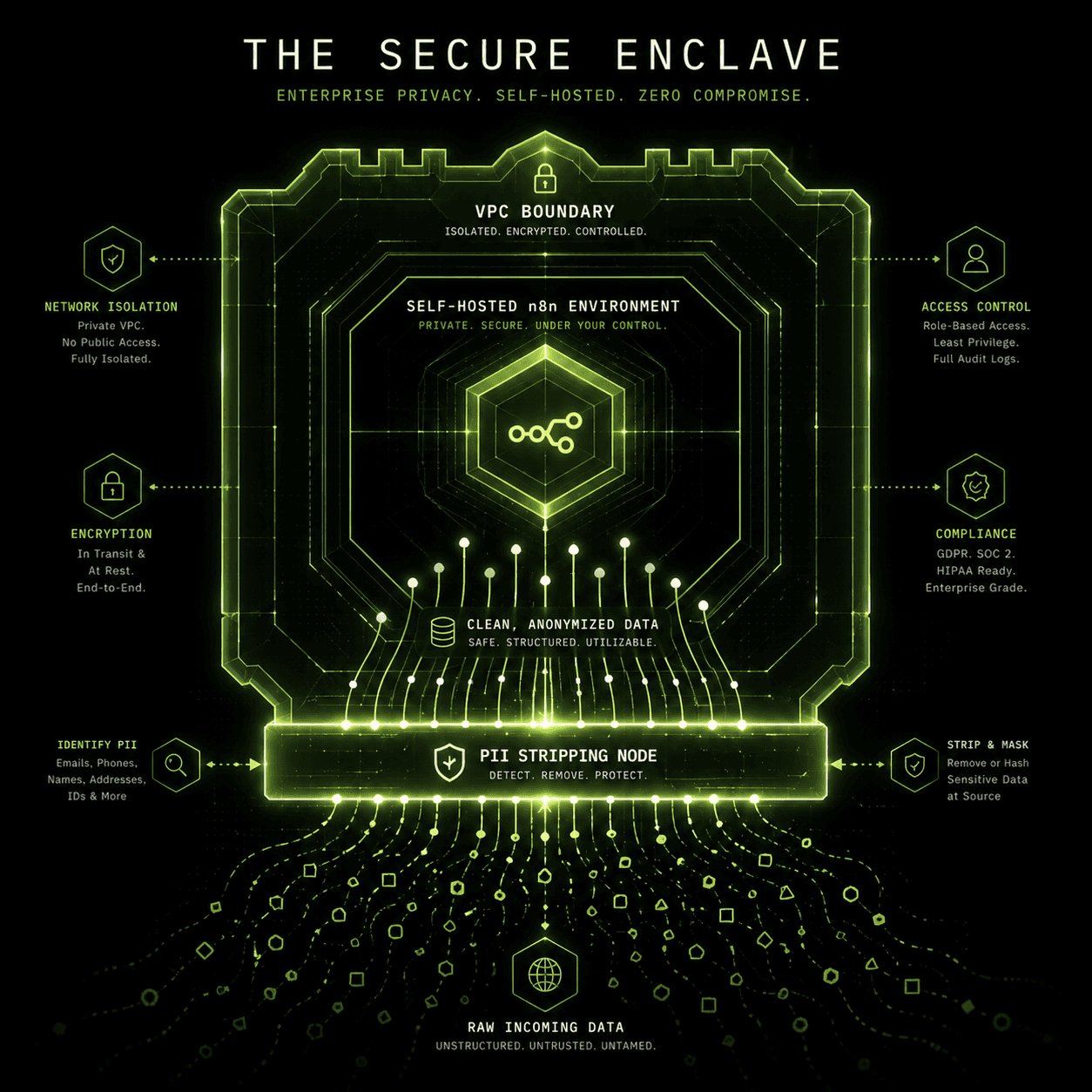
As companies mature, they realize that certain operational functions are repeated across the business. For example, your "Slack Alert Formatting" logic or your "PII Stripping" logic might be needed by Marketing, Sales, and Customer Success.
In Zapier, if three different teams need the same sequence of actions, you have to manually build those actions into three separate Zaps. If the format requirement changes, you have to hunt down every instance of that Zap and update it manually. This is a maintenance nightmare.
n8n solves this with the "Execute Workflow" node. This single feature changes everything.
It allows you to build a complex workflow (e.g., "Enrich Company Domain") and then call that workflow as a tool from inside other workflows. You are building modular, reusable micro-components. If your data provider changes their API structure, you update your one "Enrichment" sub-workflow, and instantly, the 50 distinct workflows across your company that rely on it inherit the fix.
This is clean architecture. It allows a small operations team to manage massive, company-wide automation ecosystems without drowning in maintenance overhead.
The Unit Economics: n8n vs Zapier Pricing Comparison 2026
If the architectural limitations do not convince you to migrate, the financial reality will. The most critical factor in the n8n vs zapier pricing comparison 2026 is understanding how these companies monetize your operations.
Zapier charges you a "tax on logic." Their pricing model is based on "Tasks." Every time a step successfully executes, it costs you a task.
Five years ago, when workflows were just "Trigger -> Action," this was tolerable. Today, we are in the era of AI automation. AI workflows require looping, data scraping, validation checks, and complex data structuring. A single AI agent might loop through a sub-routine 40 times to parse a document.
In Zapier, that single run just consumed 40 tasks. If you process 1,000 documents a month, Zapier will charge you thousands of dollars simply for the privilege of executing internal logic loops. You are actively penalized for building sophisticated systems.
n8n’s self-hosted enterprise model fundamentally breaks this extortionate pricing structure.
Because n8n allows you to deploy the orchestration engine within your own AWS or GCP environment, you do not pay per task. You pay for the underlying server compute. Whether your n8n instance processes 5,000 tasks a month or 5,000,000 tasks a month, your infrastructure cost remains a flat, predictable line item (often less than $100/month for the servers).
With n8n, your unit economics for automation drop to zero as you scale. With Zapier, your margins are eroded with every operational improvement you make. You cannot run a competitive business if your software vendor taxes your efficiency.
Stop Managing Workarounds. Start Building Infrastructure.
The decision between these two platforms dictates the operational ceiling of your company.
Zapier is a fantastic tool for proving a concept. It is a terrible tool for running a business. Every month you delay migrating off consumer-grade automation, you are cementing technical debt, losing data to unhandled API errors, and bleeding capital on per-task pricing models.
Transitioning from Zapier to n8n is not just a software migration; it is an architectural upgrade. It requires mapping your current spaghetti logic, identifying the redundant processes, and rebuilding them into clean, modular, error-proof infrastructure.
It is complex work, but it is the only way to build a company that scales without breaking.
Are you ready to escape the Zapier tax? Chronexa specializes in migrating mid-market companies off fragile SaaS tools and onto robust, self-hosted n8n infrastructure. Stop paying for tasks and start owning your orchestration.
We invite you to book a free Workflow Migration Scoping Call with our engineering team. We will audit your highest-volume Zaps, calculate your exact cost savings, and deliver a clear, phased migration plan to move your operations onto enterprise-grade architecture.
Book your Workflow Migration Scoping Call at chronexa.io.
About author
Ankit is the brains behind bold business roadmaps. He loves turning “half-baked” ideas into fully baked success stories (preferably with extra sprinkles). When he’s not sketching growth plans, you’ll find him trying out quirky coffee shops or quoting lines from 90s sitcoms.

Ankit Dhiman
Head of Strategy
Subscribe to our newsletter
Sign up to get the most recent blog articles in your email every week.