The Problem: Multi-Channel Growth Creates Inventory Chaos
For a growth-stage D2C brand, expanding beyond your Shopify storefront is the dream. Adding Amazon doubled your sales velocity. Getting onto Walmart Marketplace validated your brand nationwide. Launching on Target Plus was the cherry on top.
On the surface, business is booming. But inside the Operations department, it’s pure chaos.
Growth has created a fragmented reality where inventory data lives in silos. Your Shopify store thinks you have 100 units. Amazon FBA shows 40 available and 60 reserved. Your 3PL's dashboard shows 95 physical units, and your wholesale spreadsheet says 20 are promised to a distributor.
Which number is real?
For COOs and Inventory Managers at brands ranging from $5M to $100M in revenue, this uncertainty leads to a daily nightmare of manual reconciliation and operational firefighting. The consequences of this chaos are expensive:
The Overselling Nightmare: When Shopify sells the last unit at 10:01 AM, but Amazon doesn't update until 10:15 AM, you oversell. The average multi-channel brand has an oversell rate of 3-8%, meaning up to 1 in 12 orders cannot be fulfilled immediately.
The Cost of Errors: Every oversold item costs an estimated $45-$80 per incident in customer service time, refunds, apology discounts, and negative reviews.
Platform Penalties: Amazon is unforgiving. An order cancellation rate above 2.5% puts your entire Seller Central account at risk of immediate suspension—an existential threat to your business.
The Underselling Opportunity Cost: To avoid overselling, teams artificially deflate stock numbers on fast-moving SKUs. This results in showing "out of stock" when inventory actually exists in the warehouse, causing an estimated 5-12% loss in potential top-line revenue.
The Manual Grind: Operations teams spend an average of 2-4 hours daily just logging into different portals, downloading CSVs, and trying to reconcile inventory numbers in a master spreadsheet.
You cannot scale a $50M brand on spreadsheets and hope.
Why Mid-Size D2C Brands Hit This Wall
Why does this happen? Most brands start simple. When you were just on Shopify, your e-commerce platform was your source of truth. It was easy.
The complexity creeps in incrementally. You add Amazon FBA, splitting your physical stock. Then you add a 3PL for FBM and Shopify orders. Then comes wholesale, with inventory ring-fenced in spreadsheets. Suddenly, you have five sales channels pulling from three physical locations, with different APIs, different sync speeds, and different definitions of "available" stock.
Standard ERPs are often too rigid or expensive, and basic inventory plugins can't handle the complex logic of FBA reserves vs. physical 3PL stock.
Real Scenario: The Austin Home Goods Brand
Consider a real-world example of a D2C home goods brand based in Austin, TX, with $22M in annual revenue and 180 active SKUs.
Their channel mix evolved rapidly: Shopify DTC, Amazon FBA, Amazon FBM for heavy items, Walmart Marketplace, Target Plus, and 15 active wholesale accounts.
Their physical inventory was scattered: One main 3PL (like ShipBob), stock spread across three Amazon FBA centers, and a small consignment lot at a Target distribution center.
The Daily Reality:
Two full-time operations managers spent their entire mornings logging into five different seller portals and their 3PL dashboard. They exported inventory reports from each, dumped them into Excel, and manually calculated available stock, trying to account for FBA reserves and pending wholesale orders.
They then spent the next two hours manually updating inventory quantities in Shopify and pushing CSV uploads to Walmart and Target.
Despite 4 hours of daily manual labor, they still oversold fast-moving items 2-3 times a week, keeping their Amazon account health in the "at-risk" yellow zone. To compensate, they frequently marked popular items as out-of-stock on Shopify just to ensure they could fulfill Amazon orders, leaving direct-to-consumer revenue on the table.
They had hit the ceiling of manual multi-channel inventory management.
The Real-Time Inventory Sync System
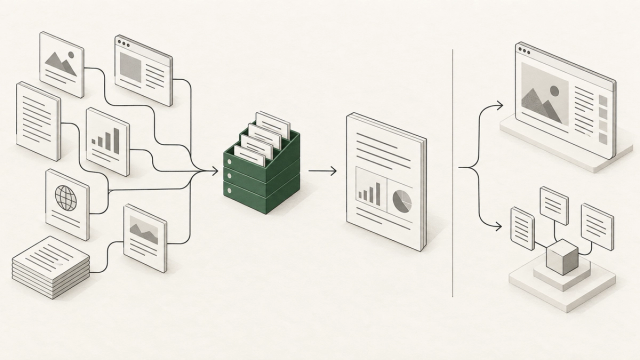
The solution isn't to hire more people to manage spreadsheets faster. The solution is an automated, hub-and-spoke architecture that establishes a single source of truth and synchronizes it across all channels in near real-time.
At Chronexa, we build these systems using flexible orchestration tools like n8n, connecting directly to your WMS/3PL and sales channel APIs.
Architecture Overview
Central Source of Truth (The Hub): Your Warehouse Management System (WMS) or 3PL (e.g., ShipBob, ShipStation, ShipHero). This is where physical reality exists.
The Spokes: All sales channels (Shopify, Amazon, Walmart, Target, Wholesale B2B portal).
Update Frequency: Event-based (real-time webhooks) or high-frequency polling (every 2-5 minutes).
Component 1: Unified Inventory Management (UIM)
Before you can sync inventory, you must define what "inventory" actually means. The system first aggregates data from all physical locations into a single, unified view.
Inventory Locations Tracked Automatically:
Main 3PL Warehouse (Physical on-hand)
Amazon FBA (Available vs. Reserved/Transferring)
Consignment Inventory (Stock at Target/Retail DCs)
In-Transit Inventory (Purchase orders on the water from suppliers)
Returns Processing (Items received but not yet graded for resale)
The Real-Time Calculation Logic:
Instead of a simple number, the automation runs a continuous calculation for every SKU:
Total Sellable Inventory =
(Physical 3PL Stock + Amazon FBA Available Stock)
MINUS
(Wholesale Reserves + Subscription Box Allocations + Safety Stock Buffer + Pending Orders Not Yet Picked)
This calculation happens automatically, 24/7, providing a dynamic "Available to Sell" number that reflects reality, not just a spreadsheet cell.
Component 2: Real-Time Channel Synchronization
Once the unified "Available to Sell" number is calculated, it must be pushed to every sales channel immediately to prevent the latency gap that causes overselling.
The Workflow:
Trigger: A customer places an order on Shopify for 5 units of SKU-123.
Instant Deduction: via Webhook, the automation immediately tells the 3PL WMS to allocate 5 units to that order. The Unified Available Stock drops instantly.
Broadcast: The automation simultaneously pushes the new, lower stock quantity via API to Amazon Seller Central, Walmart, and Target Plus.
Speed: This entire process typically happens in under 60 seconds.
If an Amazon FBA order occurs, the flow reverses, updating the central view and pushing adjusted totals to Shopify and Walmart.
Component 3: Intelligent Allocation & Buffers
Sophisticated D2C brands know that not all channels are equal. You don't always want to show 100% of your inventory everywhere. The system allows for intelligent rules:
Channel Buffers/Safety Stock: Set a rule to always hold back 5 units from Amazon and Walmart to ensure you never oversell on those strict platforms, while showing full availability on your higher-margin Shopify store.
Strategic Allocation: If total inventory drops below 50 units, automatically set Walmart stock to 0 to prioritize Shopify DTC and Amazon Prime sales until replenishment arrives.
FBA vs. FBM Routing: If FBA stock runs out, the system instantly switches the Amazon listing to FBM (Fulfilled by Merchant), utilizing your 3PL stock seamlessly without the listing going inactive.
Implementation Timeline: 10-12 Weeks
Moving off spreadsheets to an automated architecture is a surgical process, not a plug-and-play app installation.
Weeks 1-2: Audit & Data Mapping. We audit every SKU, map matching identifiers across all channels (ensuring SKU "ABC-123" on Shopify matches ASIN "B08..." on Amazon), and define the "source of truth" logic for every location.
Weeks 3-6: Build & API Connection. We configure the n8n orchestration workflows, connect securely to your 3PL, Shopify, Amazon SP-API, and Walmart APIs. We build the calculation logic for reserves and buffers.
Weeks 7-9: UAT (User Acceptance Testing). We run the system in a sandbox environment. We simulate peak traffic, process thousands of test orders, and verify that inventory syncs correctly without affecting live stores.
Weeks 10-12: Phased Rollout & Optimization. We go live channel by channel, starting with Shopify, then Amazon, etc., monitoring closely and adjusting sync frequencies and buffers based on real-world performance.
Real Results: Austin Home Goods Brand (Post-Automation)
Let's look at the impact on the Austin home goods brand 90 days after implementing this architecture.
Before Automation:
Oversell Rate: 4% (Constant firefighting with customers and Amazon).
Manual Labor: 2 staff members, 4 hours/day each (40 hours/week total).
Revenue Loss: Estimated 8% lost due to artificially marking items out-of-stock to avoid overselling.
After Automation:
Oversell Rate: <0.1% (Occasional rare race conditions only).
Manual Labor: 15 minutes/day for one manager to review exception logs. The 40 weekly hours were redeployed to supply chain optimization and vendor negotiations.
Amazon Health: Perfect metrics, removed from "at-risk" status.
Revenue Lift: A 14% increase in top-line revenue immediately realized by accurately showing available inventory across all channels, especially on fast-moving SKUs previously buffered too heavily.
Financial Impact:
Between labor savings ($75k/year equivalent) and recovered revenue from stock accuracy ($3M+ annualized), the system paid for itself in under two months.
Cost Breakdown (US Market)
Unlike rigid ERPs like NetSuite that can cost six figures to implement over a year, or generic SaaS tools that charge high per-order fees, Chronexa uses a productized service model.
Component | Estimated Cost (One-Time) | Estimated Ongoing Cost |
Architecture Audit & SKU Mapping | $8,000 | - |
Workflow Build & API Integration (5 Channels) | $25,000 | - |
Testing & Phased Deployment | $12,000 | - |
n8n Server/Infrastructure Hosting | - | $300 - $600 / month |
Ongoing Support & API Maintenance | - | $1,500 / month |
TOTAL Year 1 | ~$45,000 Setup | ~$21,600 Annual Opex |
Note: This is an estimate for a brand with ~200 SKUs and 4-5 sales channels. Complexity in SKU variants or additional channels will adjust the scope.
Common Objections Addressed
"Will this break my live store during setup?"
No. We build and test the entire sync logic in a sandbox environment. We only connect to live channels during the phased rollout, often starting with a single, low-risk product category to validate the flow before turning it on for the entire catalog.
"How do you handle Amazon FBA 'Reserved' inventory?"
This is critical. Standard plugins often miss this. Our workflows specifically query the Amazon SP-API for detailed inventory status, differentiating between "fulfillable," "unsellable," and various "reserved" states (transfers, customer orders). We configure the logic to only count truly fulfillable stock as available.
"Can this handle bundles and kits?"
Yes. If you sell a "Bedroom Set" on Shopify that consists of 1 bed frame, 1 mattress, and 2 pillows (each with their own SKUs in the 3PL), the automation tracks the component SKUs. When a bundle sells, it deducts the correct quantities of all components and recalculates the available quantities for both the individual items and the bundles instantly.
When NOT to Automate Inventory
Automation is a force multiplier, but you need force to multiply.
Revenue <$2M: At this stage, the complexity usually isn't high enough to justify the investment. A smart spreadsheet or basic Shopify plugin is likely sufficient.
Single Channel: If you only sell on Shopify, use Shopify's native inventory tools.
Bad Data Foundation: If your SKUs don't match across channels (e.g., "Blue-Shirt-L" on Shopify is just "12345" on Amazon) and you have no mapping document, you are not ready. Automation will just scale your data mess faster. Clean your data first.
Getting Started: Week 1 Action Items
If you are drowning in spreadsheets and overselling notifications, don't immediately hire an agency. Start with internal housekeeping to prepare for automation:
The Master SKU Audit: Create a single spreadsheet listing every physical product you sell. Map the corresponding SKU/identifier for that product across Shopify, Amazon (ASIN/FNSKU), Walmart, and your 3PL. Identify gaps where identifiers don't match.
Define Your Rules: Document your ideal inventory logic on paper. (e.g., "We always want to keep a 10-unit safety buffer on Amazon," or "Wholesale orders should only pull from the main 3PL, never FBA").
Quantify the Pain: Measure exactly how many hours per week your team spends on manual reconciliation and count your overselling incidents for the last month. This establishes your baseline for ROI.
Ready to Stop the Overselling Nightmare?
Scaling a multi-channel brand is hard enough without constantly fighting your own inventory data. Stop relying on spreadsheets and hope.
Chronexa builds custom, real-time inventory automation architectures for high-growth D2C brands, ensuring you can sell confidently on every channel without fear of stockouts or suspensions.
Book a 45-Minute Operations Architecture Review
We’ll review your current channel setup and 3PL integration, and map out what a real-time sync strategy looks like for your specific SKU count and volume.
Sylas is the brains behind bold business roadmaps. He loves turning “half-baked” ideas into fully baked success stories (preferably with extra sprinkles). When he’s not sketching growth plans, you’ll find him trying out quirky coffee shops or quoting lines from 90s sitcoms.
Sylas Merrick
Head of Strategy
Subscribe to our newsletter
Sign up to get the most recent blog articles in your email every week.