For many marketing teams at D2C brands, AI has become a synonym for "faster spam." It allows them to generate more content and send more emails, but the quality of that engagement has plummeted. The result is the "Uncanny Valley" of e-commerce—communications that are almost human but off-putting enough to destroy trust.
But there is a different way to deploy this technology.
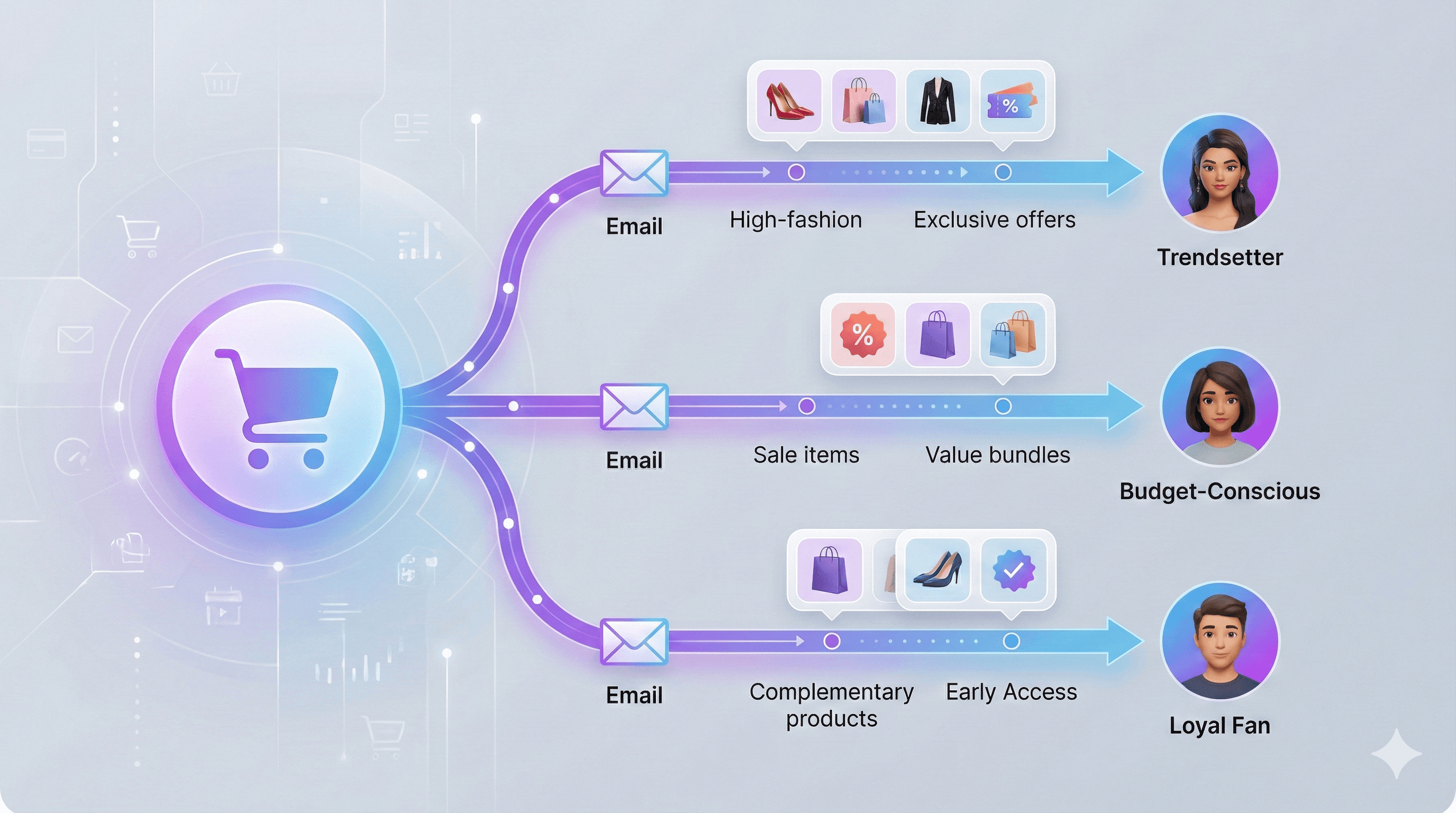
The most sophisticated D2C brands in the US aren't using AI to write generic poetry. They are using it to build invisible infrastructure. They are using automation to analyze behavior and serve the exact right message at the exact right time, making the customer feel seen rather than targeted.
When done right, AI automation doesn't feel like a machine. It feels like a boutique shop assistant who remembers your name, your size, and the fact that you prefer earth tones.
Here is how mid-market e-commerce brands are fixing their revenue leaks with intelligent, invisible automation.
Where Marketing Leaks Revenue (The "Dumb Data" Problem)
If you have a Shopify or WooCommerce store with 200 SKUs and a customer list of 50,000, you are sitting on a goldmine of behavioral data. The problem is that most marketing stacks are too "dumb" to use it effectively.
Revenue leakage in D2C rarely happens because of bad products. It happens because of a disconnect between User Intent and Brand Response.
Consider the standard e-commerce scenario:
A customer, Sarah, bought a heavy winter parka from you last November. It is now April. She visits your site and spends five minutes browsing floral summer dresses but leaves without adding anything to her cart.
The "Dumb" Response: Your standard email platform sends her a generic "We Miss You!" blast featuring your best-selling... winter boots. Result: Sarah ignores it or unsubscribes.
The "Leaky" Response: She gets nothing because she didn't add to cart, so the "Abandoned Cart" flow never triggered.
The Revenue Leak: You missed a high-intent window. Sarah was ready to buy for a new season, but you treated her like a stranger.
Multiply this interaction by thousands of visitors. You are leaking revenue through:
Abandoned Browsing: 90% of visitors never add to cart, yet they signal intent.
Generic Post-Purchase: Treating a VIP who spent $500 the same as a first-time buyer.
Mismatched Cross-Sells: Recommending products that clash with previous purchases (e.g., suggesting leather care to a customer who only buys vegan leather).
The Intelligent System: 5 Layers of Context
To fix this, we build marketing stacks that function like a nervous system. We use n8n to connect the brain (OpenAI/LLMs) to the limbs (Shopify/Klaviyo/Attentive).
Here is the 5-layer architecture we use to turn raw data into revenue.
Layer 1: Granular Behavioral Tracking
We don't just track "Clicked Email." We listen for specific webhooks from the e-commerce platform.
Did they view the Size Guide? (High intent).
Did they filter by color "Green"? (Preference signal).
Did they read the "Shipping Returns" page? (Hesitation signal).
Layer 2: AI-Powered Segmentation
Instead of static lists (e.g., "Spent > $100"), we use AI to build dynamic segments. We feed customer history into a model to tag them with attributes like "Discount Seeker," "Full-Price Loyalist," or "Gift Giver." This ensures we never send a 20% off coupon to someone who was happy to pay full price.
Layer 3: Dynamic Content Generation (The "Invisible" AI)
This is where the magic happens. We don't ask ChatGPT to "write an email." We ask it to contextualize an email.
The Prompt: "The customer bought [Item A] 3 months ago. They just viewed [Item B]. Write a 2-sentence bridge explaining why Item B is a perfect upgrade for their upcoming summer trip, keeping the tone casual and witty."
The Result: A snippet of copy that is injected into a standard HTML template. It looks hand-written, but it’s generated at scale.
Layer 4: Send-Time Optimization
We stop batch-blasting at 9:00 AM EST. The automation looks at the specific user’s open history. If Sarah opens emails at 8:00 PM on Thursdays, that is when her email is scheduled.
Layer 5: Auto-Learning (A/B Testing)
The system monitors performance. If "Subject Line Style A" (Direct) outperforms "Subject Line Style B" (Mysterious) for the "Discount Seeker" segment, the system automatically weights future sends toward Style A for that group.
The Comparison: Generic vs. Intelligent
To visualize the difference, look at an Abandoned Cart email.
The Generic Approach (Standard Klaviyo Flow):
Subject: You left something behind!
Body: Hey there, looks like you forgot this item. Come back and finish your purchase!
Shutterstock
*
The Intelligent Automation Approach:
Subject: Still thinking about the Weekender Bag?
Body: Hey Sarah,
We noticed you were eyeing the Canvas Weekender. Since you picked up the Travel Pouch last month, this is the perfect companion for that trip you’re planning—and yes, the pouch fits perfectly in the side pocket.
We’ve saved your cart for 24 hours.
*
Shutterstock

*
The second email feels human. It references past history ("Travel Pouch"), connects the dots ("fits in the side pocket"), and validates the current interest. But it was fully automated.
Results That Matter
This isn't theoretical. We recently deployed this stack for a US-based lifestyle accessories brand with a 50,000-subscriber list. They were struggling with list fatigue and declining open rates.
The Q4 Results:
Open Rates: Jumped from an industry average of 18% to 34%. People open emails that feel relevant.
Cart Recovery Rate: Increased from 12% to 28%. The contextual reminders proved far more effective than generic nudges.
Revenue per Email: We saw a 3.2x improvement. By sending fewer, better emails, total revenue went up while unsubscribe rates went down.
Total Impact: In Q4 alone, this "invisible" automation system generated $180,000 in incremental revenue—money that would have otherwise walked out the door.
The Cost Structure:
The brand was previously paying a marketing agency $5,000/month to manually curate newsletters and segments.
The automated system runs on n8n, OpenAI API credits, and their existing Klaviyo subscription. The total running cost is roughly $800/month.
What Stays Human?
Crucially, the AI does not set the strategy. The Creative Director still decides the seasonal themes, the brand voice guidelines, and the visual assets. The AI acts as the "deployment engine," ensuring that the beautiful assets reach the right people with the right context.
Build Your Stack: A Phased Approach
If you try to build a "Layer 5" system overnight, you will break things. We recommend a "Crawl, Walk, Run" implementation.
Phase 1: The Fix (Weeks 1-2)
Focus on Abandoned Cart and Browse Abandonment. These are your highest intent users. Implement simple AI personalization here (e.g., referencing the specific category they browsed).
Phase 2: The Relationship (Weeks 2-4)
Implement Post-Purchase flows. Use automation to predict when a customer needs a refill or a complementary product based on their usage interval.
Phase 3: The Prediction (Month 2+)
Roll out Predictive Segmentation. Start tailoring your homepage and email content based on the "Discount Seeker" vs. "Loyalist" tags.
Conclusion
Your customers are tired of being shouted at by algorithms. They want to be understood.
For D2C brands, the next phase of growth won't come from louder ads or more frequent emails. It will come from using AI to bring the intimacy of a local shopkeeper to the scale of the internet.
You don't need a team of 20 data scientists to build this. You need a smart workflow and the courage to stop sending generic blasts.
Get a Marketing Automation Audit We will review your current email flows and data setup to identify where you are leaking revenue.
Written by Ankit Dhiman — Founder & CEO at Chronexa. Ankit leads a lean team of n8n automation engineers building production-grade AI workflows for mid-market B2B companies across fintech, legal, SaaS, and operations. Book a free 30-minute strategy call to see what's possible for your team.
Related Articles
About author
Ankit is the brains behind bold business roadmaps. He loves turning “half-baked” ideas into fully baked success stories (preferably with extra sprinkles). When he’s not sketching growth plans, you’ll find him trying out quirky coffee shops or quoting lines from 90s sitcoms.

Ankit Dhiman
Head of Strategy
Subscribe to our newsletter
Sign up to get the most recent blog articles in your email every week.