Last quarter, we proved that logic wrong.
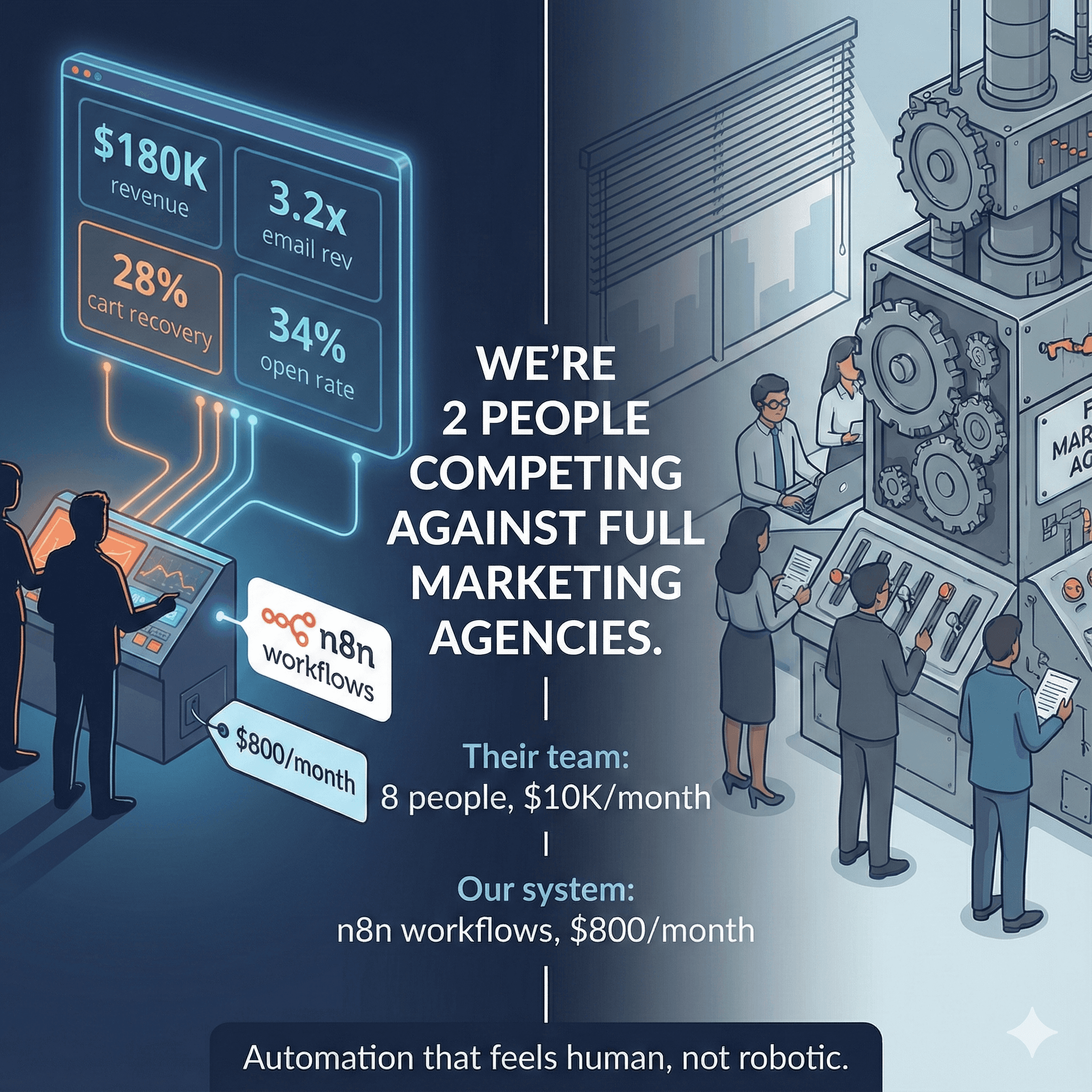
We are Chronexa, a two-person automation consultancy. We went head-to-head against a traditional 8-person marketing agency for a mid-market D2C brand.
The agency brought headcount, meetings, and a hefty retainer.
We brought n8n workflows, OpenAI APIs, and a relentless focus on data.
The results of our automated system in Q4 speak for themselves:
$180,000 in incremental revenue generated.
3.2x increase in revenue per email sent.
28% abandoned cart recovery rate (up from 12%).
34% open rates (vs. industry average of 18%).
And the kicker? The running cost of our system was $800/month. The agency cost $10,000/month.
Here is why the "Agency Model" is failing D2C brands, and why "Human-Like Automation" is the future.
The Problem: Activity vs. Relevance
Why did an 8-person team perform worse than a headless server running n8n?
Because agencies are incentivized to show activity. They justify their retainer by sending more emails. They blast your list three times a week with generic newsletters because "staying top of mind" is a KPI they can control.
But customers don't hate email; they hate irrelevant email.
When a human copywriter has to crank out campaigns for 15 different clients, they inevitably revert to generic templates. They send the same "Summer Sale!" email to the customer who just bought a winter coat and the customer who hasn't visited the site in two years.
This "spray and pray" approach burns out your list. It trains your customers to ignore you.
The Solution: Automation That Feels Human
Our approach was different. We didn't try to out-write the agency. We out-contextualized them.
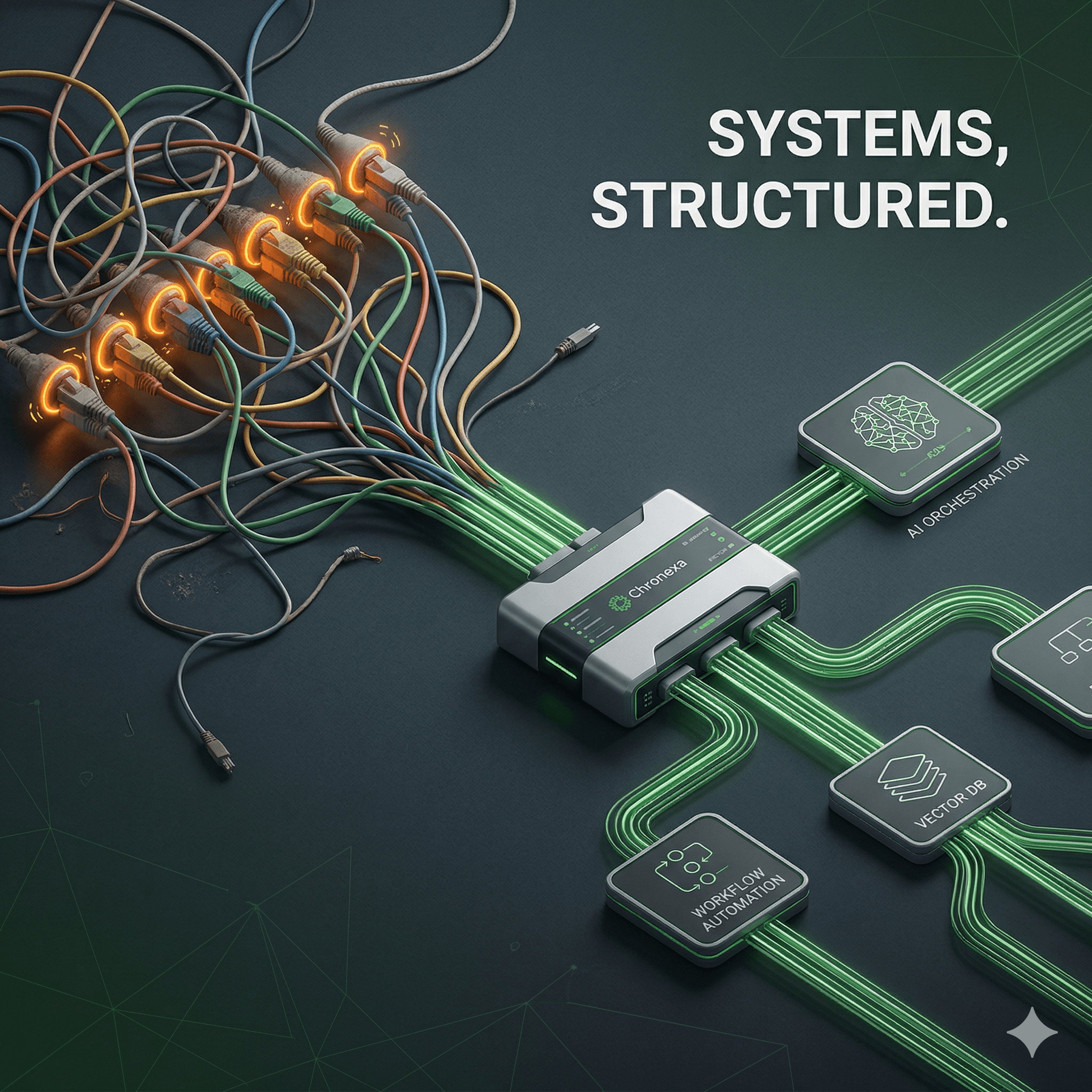
We built an automation engine that treats every single customer as an individual. We used n8n to connect the brand’s Shopify data directly to OpenAI, and then to their email platform.
Instead of a human deciding "Let's send an email to everyone on Tuesday," our system waits for user signals.
The "Human" Difference in Action
The Agency Way (Robotic Human):
Trigger: Customer abandons cart.
Action: Wait 4 hours. Send generic Template A.
Copy: "Hey! You forgot something. Come back and buy it."
Result: 12% recovery rate. It feels like a system notification.
The Chronexa Way (Human-Like Robot):
Trigger: Customer abandons cart containing a "Leather Weekend Bag."
Context Check: Automation checks history. Customer bought "Leather Care Kit" 6 months ago.
Action: AI generates a personalized snippet.
Copy: "Hey [Name], still thinking about the Weekend Bag? It’s made from the same full-grain hide as the Care Kit you picked up last spring, so you already have everything you need to keep it looking fresh. We saved your cart."
Result: 28% recovery rate. It feels like a helpful shop assistant.
The customer doesn't know an LLM wrote that bridge sentence. They just know that the brand remembers them. That feeling of recognition is what drives the 3.2x revenue per send.
The Economics of Automation
For the CFO or Founder of a D2C brand, the math is undeniable.
The Agency P&L:
Cost: $10,000/month Retainer.
Hidden Cost: Management overhead (hours you spend approving their generic calendars).
Scalability: Linear. To get double the output, they need to hire more juniors, which eventually degrades quality.
The Automation P&L:
Cost: ~$800/month (Software subscriptions + API credits).
Hidden Cost: Initial setup time (2-4 weeks).
Scalability: Infinite. The system treats the 50,000th customer with the same level of personalization as the 1st.
Why "Robotic" AI Fails
We aren't saying "fire all humans." The brand still needs a Creative Director. They still need a Brand Strategist to decide what to sell and how it should look.
But you do not need humans to do the "grunt work" of segmentation and execution.
In fact, humans are bad at that. Humans get tired. Humans forget to check if a customer already bought the item in blue before suggesting it in red. Computers don't forget.
The mistake most brands make with AI is using it to generate generic text faster. That is Robotic Automation.
The win lies in using AI to process data to create specific context. That is Human Automation.
Stop Renting Headcount, Start Building IP
If you are paying an agency five figures a month to hit "Send" on newsletters that generate a 0.1% conversion rate, you are renting an expensive, inefficient machine.
By building an owned automation stack, you aren't just saving money; you are building an asset. You are building a system that learns, adapts, and converts while you sleep.
The Q4 numbers don't lie. The era of the "bloated agency retainer" is ending. The era of the "lean, automated growth team" is here.
Get a D2C Automation Audit Let us look at your current email flows. We’ll show you exactly where the "Agency Model" is leaking revenue.
About author
Ankit is the brains behind bold business roadmaps. He loves turning “half-baked” ideas into fully baked success stories (preferably with extra sprinkles). When he’s not sketching growth plans, you’ll find him trying out quirky coffee shops or quoting lines from 90s sitcoms.

Ankit Dhiman
Head of Strategy
Subscribe to our newsletter
Sign up to get the most recent blog articles in your email every week.